Lab-2-5
(2% of the course mark)
MySQL MVC Express Lab
- In this lab, students will refactor the Express MVC app that was built in Lab 1-3. The lab will focus on integrating the mysql2 package into the Express MVC app.
Lab objectives
-
Learn the technique of properly in integrating the mysql2 package into the Express MVC app.
-
Use the factory / singleton pattern to build and share database connection and querying capabilites.
-
Use connection pooling effectively.
Build Schema
- Open MySQL Workbench and run the following SQL commands:
-- Drop the database if it exists
DROP DATABASE IF EXISTS BACKEND_DB;
-- Create the database
CREATE DATABASE BACKEND_DB;
-- Use the database
USE BACKEND_DB;
-- Create the USERS table
CREATE TABLE USERS (
    ID INT AUTO_INCREMENT PRIMARY KEY,
    USER_NAME VARCHAR(50) UNIQUE NOT NULL,
    EMAIL VARCHAR(50) UNIQUE NOT NULL,
    CREATED_AT TIMESTAMP DEFAULT CURRENT_TIMESTAMP
);
-- Insert a row into the USERS table
INSERT INTO
USERS (USER_NAME, EMAIL)
VALUES
('bill.gates', 'bill.gates@microsoft.com'),
('elon.musk', 'elon.musk@tesla.com');
-- Verify
SELECT * FROM USERS;
Ensure that all the database objects are created successfully before proceeding to the next step.
Create Node.js Express app
-
Open VSCode and create a folder named MySql-Express-App.
-
Open the terminal and change the directory to MySql-Express-App.
-
Initialize the app by running the following command:
npm init -y
- Install typescript by running the following commands:
npm install typescript -D
npm install @types/node -D
- Install mysql2 by running the following command:
npm install mysql2
- Initialize tsconfig.json by running the following command:
npx tsc --init
-
Modify tsconfig.json and uncomment outDir.
-
Modify tsconfig.json and add the following property:
"removeComments": true
- Install nodemon by running the following command:
npm install nodemon -D
- Install dotenv by running the following command:
npm install dotenv
- Create an .env file in the root of your project and enter the following.
PORT=3000
SQL_HOST=localhost
SQL_USER=root
SQL_PASSWORD=password
SQL_DB_NAME=BACKEND_DB
SQL_CONNECTION_LIMIT=10
- Install express by running the following commands:
npm install express
npm install @types/express -D
- Configure package.json by adding a new entry to the scripts property.
"build": "tsc",
"start": "nodemon ./dist/index",
- Configure package.json by adding a new property.
"type": "module"
- Create a file named index.ts and add the following code:
// Developer:
// Purpose:

import * as dotenv from "dotenv";
dotenv.config();

import express, { type Request, type Response } from "express";

const PORT: number = process.env.PORT ? parseInt(process.env.PORT) : 3000;
const app = express();

app.all("/{*catchAll}", (req: Request, res: Response) => {
  res.status(404).json({
    message: `Invalid route (${req.url}) or HTTP method (${req.method}).`,
  });
});

app.listen(PORT, () => {
  console.log(`Server is running at http://localhost:${PORT}`);
  process.on("SIGTERM", shutdown);
  process.on("SIGINT", shutdown);
});

function shutdown() {
  console.log(`Server is shutting down.`);
  process.exit(0);
}
- Build the app by running the following command:
npm run build
- Start the app by running the following command:
npm run start
Verify that your Express app starts without errors before proceeding to the next step.
Express app MVC
-
In the root folder of the app, create a folder named lib.
-
In the lib folder, create a file named DBConnectionFields.ts and add the following code:
// Developer:
// Purpose:

export class DBConnectionFields {
  host: string = "";
  user: string = "";
  password: string = "";
  database: string = "";
  connectionLimit: number = 0;

  constructor(
    host: string,
    user: string,
    password: string,
    database: string,
    connectionLimit: number
  ) {
    this.host = host;
    this.user = user;
    this.password = password;
    this.database = database;
    this.connectionLimit = connectionLimit;
  }
}
- In the lib folder, create a file named MySqlDB.ts and add the following code:
// Developer:
// Purpose:

import mysql, { type Pool } from "mysql2/promise";
import { DBConnectionFields } from "./DBConnectionFields.js";

export class MySqlDB {
  dbConnectionFields: DBConnectionFields | null = null;
  pool: Pool | null = null;

  constructor() {}

  setDbConnectionFields(dbConnectionFields: DBConnectionFields) {
    this.dbConnectionFields = dbConnectionFields;
  }

  async connect() {
    let connectResponse = {
      isConnected: false,
      message: "",
    };

    try {
      if (this.dbConnectionFields != null) {
        this.pool = mysql.createPool({
          host: this.dbConnectionFields.host,
          user: this.dbConnectionFields.user,
          password: this.dbConnectionFields.password,
          database: this.dbConnectionFields.database,
          waitForConnections: true,
          connectionLimit: this.dbConnectionFields.connectionLimit,
        });

        connectResponse.isConnected = true;
        connectResponse.message = `Connected to: ${this.dbConnectionFields.database}.`;
      }
    } catch (error: any) {
      connectResponse.message = `Could not connect to: ${this.dbConnectionFields?.database}.`;
    } finally {
      return connectResponse;
    }
  }

  async query(sqlStatement: string, options: [] = []) {
    let queryResult: any;

    try {
      if (this.pool != null) {
        queryResult = await this.pool.execute(sqlStatement, options);
      }
    } catch (error: any) {
      console.log("code:", error.code);
      console.log("errno:", error.errno);
      console.log("sqlState:", error.sqlState);
      console.log("sqlMessage:", error.sqlMessage);
      console.log("sql:", error.sql);
    } finally {
      return queryResult;
    }
  }

  async disConnect() {
    let disConnectResponse = {
      isDisconnected: false,
      message: "",
    };

    try {
      if (this.pool != null) {
        await this.pool.end();
      }

      disConnectResponse.isDisconnected = true;
      disConnectResponse.message = `Disconnected to: ${this.dbConnectionFields?.database}.`;
    } catch (error) {
      disConnectResponse.message = `Could not disconnect to: ${this.dbConnectionFields?.database}.`;
    } finally {
      return disConnectResponse;
    }
  }
}

// This cached by node and returns the same instance all the time, acts like a singleton pattern
export const mySqlDB = new MySqlDB();
-
In the root folder of the app, create a folder named models.
-
In the models folder, create a file named userModel.ts and add the following code:
// Developer:
// Purpose:

import { mySqlDB } from "../lib/MySqlDB.js";

export interface User {
  id: number;
  userName: string;
  email: string;
  createdAt: Date;
}

export const UserModel = {
  findAll: async (): Promise<User[]> => {
    const queryResult = await mySqlDB.query("SELECT * FROM USERS");

    if (queryResult) {
      if (queryResult[0]) {
        const mapResult = queryResult[0].map((user: any) => ({
          id: user.ID,
          userName: user.USER_NAME,
          email: user.EMAIL,
          createdAt: new Date(user.CREATED_AT),
        }));

        return mapResult;
      }
    }

    return [];
  },

  findById: async (id: number): Promise<User | undefined> => {
    const options = [id];
    const queryResult = await mySqlDB.query(
      "SELECT * FROM USERS WHERE ID = ?",
      options as any
    );

    if (queryResult) {
      if (queryResult[0]) {
        const mapResult = queryResult[0].map((user: any) => ({
          id: user.ID,
          userName: user.USER_NAME,
          email: user.EMAIL,
          createdAt: new Date(user.CREATED_AT),
        }));

        return mapResult[0];
      }
    }

    return undefined;
  },

  findByUserName: async (userName: string): Promise<User | undefined> => {
    const options = [userName];
    const queryResult = await mySqlDB.query(
      "SELECT * FROM USERS WHERE USER_NAME = ?",
      options as any
    );

    if (queryResult) {
      if (queryResult[0]) {
        const mapResult = queryResult[0].map((user: any) => ({
          id: user.ID,
          userName: user.USER_NAME,
          email: user.EMAIL,
          createdAt: new Date(user.CREATED_AT),
        }));

        return mapResult[0];
      }
    }

    return undefined;
  },

  create: async (userName: string, email: string): Promise<boolean> => {
    const options = [userName, email];
    const queryResult = await mySqlDB.query(
      "INSERT INTO USERS (USER_NAME, EMAIL) VALUES(?, ?)",
      options as any
    );

    if (queryResult) {
      if (queryResult[0]?.affectedRows) {
        return true;
      }
    }

    return false;
  },

  update: async (
    id: number,
    userName: string,
    email: string
  ): Promise<boolean> => {
    const options = [userName, email, id];
    const queryResult = await mySqlDB.query(
      "UPDATE USERS SET USER_NAME = ?, EMAIL = ? WHERE ID = ?",
      options as any
    );

    if (queryResult) {
      if (queryResult[0]?.affectedRows) {
        return true;
      }
    }

    return false;
  },

  delete: async (id: number): Promise<boolean> => {
    const options = [id];

    const queryResult = await mySqlDB.query(
      "DELETE FROM USERS WHERE ID = ?",
      options as any
    );

    if (queryResult) {
      if (queryResult[0]?.affectedRows) {
        return true;
      }
    }

    return false;
  },
};
-
In the root folder of the app, create a folder named services.
-
In the services folder, create a file named userService.ts and add the following code:
// Developer:
// Purpose:

import { UserModel } from "../models/userModel.js";

export const UserService = {
  getAll: async () => await UserModel.findAll(),
  getById: async (id: number) => await UserModel.findById(id),
  getByUserName: async (userName: string) =>
    await UserModel.findByUserName(userName),
  create: async (userName: string, email: string) =>
    await UserModel.create(userName, email),
  update: async (id: number, userName: string, email: string) =>
    await UserModel.update(id, userName, email),
  delete: async (id: number) => await UserModel.delete(id),
};
-
In the root folder of the app, create a folder named controllers.
-
In the controllers folder, create a file named userController.ts and add the following code:
// Developer:
// Purpose:

import { type Request, type Response } from "express";
import { UserService } from "../services/userService.js";

export const UserController = {
  getAll: async (req: Request, res: Response): Promise<void> => {
    res.json(await UserService.getAll());
  },

  getById: async (req: Request, res: Response): Promise<void> => {
    const user = await UserService.getById(Number(req.params.id));
    user ? res.json(user) : res.status(404).json({ message: "User not found" });
  },

  getByUserName: async (req: Request, res: Response): Promise<void> => {
    const user = await UserService.getByUserName(String(req.params.userName));
    user ? res.json(user) : res.status(404).json({ message: "User not found" });
  },

  create: async (req: Request, res: Response): Promise<void> => {
    const { userName, email } = req.body;
    if (!userName) {
      res.status(400).json({ message: "userName is required" });
      return;
    }

    if (!email) {
      res.status(400).json({ message: "email is required" });
      return;
    }

    (await UserService.create(userName, email))
      ? res.status(201).send()
      : res.status(500).json({
          message: "Internal Server Error, contact the system administrator",
        });
  },

  update: async (req: Request, res: Response): Promise<void> => {
    const { userName, email } = req.body;
    (await UserService.update(Number(req.params.id), userName, email))
      ? res.status(204).send()
      : res.status(404).json({ message: "User not found" });
  },

  delete: async (req: Request, res: Response): Promise<void> => {
    (await UserService.delete(Number(req.params.id)))
      ? res.status(204).send()
      : res.status(404).json({ message: "User not found" });
  },
};
-
In the root folder of the app, create a folder named routes.
-
In the routes folder, create a file named userRouter.ts and add the following code:
// Developer:
// Purpose:

import { Router } from "express";
import { UserController } from "../controllers/userController.js";

const router = Router();

router.get("/", UserController.getAll);
router.get("/:id", UserController.getById);
router.get("/username/:userName", UserController.getByUserName);
router.post("/", UserController.create);
router.put("/:id", UserController.update);
router.delete("/:id", UserController.delete);

export default router;
- Update index.ts and add the following code:
// Developer:
// Purpose:

import * as dotenv from "dotenv";
dotenv.config();

import express, { type Request, type Response } from "express";
const PORT: number = process.env.PORT ? parseInt(process.env.PORT) : 3000;

import { mySqlDB } from "./lib/MySqlDB.js";
import { DBConnectionFields } from "./lib/DBConnectionFields.js";
import userRouter from "./routes/userRouter.js";

const app = express();
const dBConnectionFields = new DBConnectionFields(
  String(process.env.SQL_HOST),
  String(process.env.SQL_USER),
  String(process.env.SQL_PASSWORD),
  String(process.env.SQL_DB_NAME),
  Number(process.env.SQL_CONNECTION_LIMIT)
);

mySqlDB.setDbConnectionFields(dBConnectionFields);
const connectResponse = await mySqlDB.connect();
console.log(connectResponse);

app.use(express.json());
app.use("/api/users", userRouter);

app.all("/{*catchAll}", (req: Request, res: Response) => {
  res.status(404).json({
    message: `Invalid route (${req.url}) or HTTP method (${req.method}).`,
  });
});

app.listen(PORT, () => {
  console.log(`Server is running at http://localhost:${PORT}`);
  process.on("SIGTERM", shutdown);
  process.on("SIGINT", shutdown);
});

async function shutdown() {
  console.log(`Server is shutting down.`);
  const disConnectResponse = await mySqlDB.disConnect();
  console.log(disConnectResponse);
  process.exit(0);
}
- Build the app by running the following command:
npm run build
Postman testing
- Use Postman to perform the following testing scenarios:
| Method | Endpoint | Screenshot |
|---|---|---|
| GET | /api/users | get-all.png |
| GET | /api/users/valid-user-id | get-one01.png |
| GET | /api/users/invalid-user-id | get-one02.png |
| GET | /api/users/userName/valid-user-name | get-one03.png |
| GET | /api/users/userName/invalid-user-name | get-one04.png |
| POST | /api/users | post.png |
| PUT | /api/users/valid-user-id | put01.png |
| PUT | /api/users/invalid-user-id | put02.png |
| DELETE | /api/users/valid-user-id | delete.png |
Sample request body for POST and PUT
{
  "userName": "firstname.lastname",
  "email": "firstname.lastname@email.com"
}
Implement Lab-2-3 Library app (MySql-Express-App)
- Modify the .env file of the MySql-Express-App and update the value of SQL_DB_NAME to the name of the library app schema.
SQL_DB_NAME=NAME_OF_LIBRARY_APP_SCHEMA
- Refactor MySql-Express-App and create new routes, controllers, services, and models:
-
Allow patrons to borrow and return books.
-
View current book inventory levels.
- Build and run the modified app and use Postman to test the scenarios above and name the screenshots as borrow.png, return.png and inventory.png.
Submission
- Create a folder named submit.
Delete the node_modules folder on any app that you are submitting.
-
Copy the MySql-Express-App folder and all the screenshots (get-all.png, get-one01.png, get-one02.png, get-one03.png, get-one04.png, post.png, put01.png, put02.png, delete.png, borrow.png, return.png and inventory.png) to the submit folder.
-
Create a zip file of the submit folder.
-
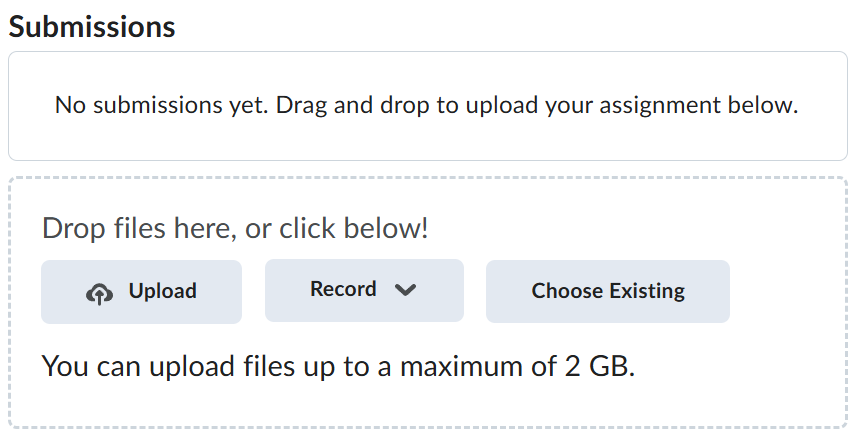
Navigate back to where the lab was originally downloaded, there should be a Submissions section (see below) where the zip file can be uploaded.